What is a professional community?
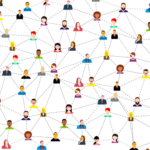
A professional community is a network of people connected by a shared profession, industry, or job function. Unlike social communities built around interest or identity, professional communities exist to deliver career-relevant value: peer knowledge, job opportunities, mentorship, and credibility within a specific field.
The core purpose of a professional community
People don’t join professional communities to make friends. They join because they want to solve problems faster, advance their careers, and connect with people who understand exactly where they’re coming from.
That’s true whether someone is a first-year data analyst looking for a mentor or a seasoned CFO looking for a peer sounding board. The functional need is the same: access to people who get it.
For the organizations that build and run these communities — associations, companies, nonprofits — the equation is different. A well-run professional community creates industry influence, improves member retention, and establishes the organization as the definitive home for its profession.
Common reasons members join a professional community:
- Access to job postings and professional referrals
- Peer exchange with people solving similar problems
- Mentorship from more experienced practitioners
- Visibility and credibility within their field
- Invitations to speak, lead, or contribute at industry events
Types of professional communities
Professional communities take several forms. Understanding the type you’re running — or building — shapes every decision that follows.
Professional associations
Formal membership organizations built around a specific industry or credential. Examples include the American Bar Association for lawyers, the Project Management Institute for project managers, and the Society for Human Resource Management. These communities typically charge dues, offer certifications, and operate under formal governance structures with boards and bylaws.
Industry and role-based networks
Semi-formal or informal groups that connect people who share a job title or industry focus. A network for CMOs, a community for women in engineering, or a peer group for nonprofit fundraising professionals all fit this model. These are driven by peer exchange rather than certification, and typically operate on dedicated community platforms or gated online spaces.
Workplace and internal professional communities
Communities built inside a single organization to connect employees across departments, regions, or functions. Sometimes called communities of practice, these are common in large enterprises where cross-functional knowledge sharing doesn’t happen organically. A global technology company might run an internal community specifically for product managers across its business units.
Subgroups within broader communities
Some professional communities operate as subgroups within a larger network. A university alumni platform, for example, might contain a dedicated group for graduates working in healthcare, another for those in finance, and another for first-generation professionals. These benefit from the parent community’s infrastructure while serving a much more specific professional audience.
For a broader look at how professional communities fit within the wider landscape, see the full guide to types of online communities.
How professional communities differ from similar community types
The term “professional community” often gets used interchangeably with related concepts. They’re not the same.
| Community type | Who it’s for | Primary value | Example |
| Professional community | People in the same industry or role | Career growth, peer exchange, credibility | A network for HR professionals |
| B2B community | Companies or business buyers | Business relationships, deals, support | A vendor ecosystem community |
| Membership community | Dues-paying members of an organization | Exclusive access, events, content | A trade association platform |
| Learning community | Students or skill-builders | Structured education, certifications | A cohort-based bootcamp |
In practice, these models overlap. Many professional associations function as both a professional community and a membership community. The distinction lies in the primary value exchange. A professional community’s core currency is peer connection and career advancement — everything else is secondary.
For a deeper look at where professional and B2B communities diverge, see the Hivebrite glossary entry on B2B communities.
How professional communities show up online
Most professional communities today exist — at least partially — online. The format varies widely.
Some operate through dedicated platforms with member directories, forums, and event management. Others run informally through Slack workspaces or LinkedIn Groups. The most established ones run on purpose-built community platforms that give operators control over data, branding, and member experience.
Private, gated communities consistently outperform public ones for professional use. When members know that every other member has been verified — by job title, employer, or credential — they’re more willing to ask candid questions, share genuine challenges, and connect with actual peers rather than recruiters or vendors.
Three things have pushed professional communities away from social media and onto private platforms: data ownership, a more controlled member experience, and the limits of what a Facebook Group or LinkedIn community can realistically offer.
What members expect from a professional community
Running a professional community means consistently delivering on a set of member expectations. When the community stops delivering, members stop engaging — quietly, without telling you why.
Career advancement opportunities
Job postings, referrals, and introductions to hiring managers are consistently among the top reasons professionals join and stay. Beyond jobs, members also value speaking invitations, award nominations, advisory board opportunities, and any path to visible credibility in their field.
Peer knowledge sharing
Members want access to people who have solved the same problems they’re facing now. Discussion forums and Q&A threads that surface real practitioner experience tend to generate more engagement than polished blog posts or broadcast-style announcements. The more specific the question, the more valuable the answer.
Mentorship and guidance
Mentorship is a retention driver on both ends. Junior members join for access to experienced practitioners. Senior members stay because contributing to the next generation extends their own professional identity. A formal mentorship program — or even light-touch peer matching — makes both groups more likely to remain active.
Strategic guidance and common pitfalls
Define membership criteria clearly
Open membership lowers the barrier to join, but it can dilute the professional identity of the community. Decide early whether membership is verified — through corporate email, job title, or credentials — or self-selected. Communicate that standard publicly and apply it consistently from day one.
Protect member value
The fastest way to lose professional members is to let the community become a sales channel. If members feel like targets rather than participants, they leave. Set clear guidelines around solicitation, sponsored content, and vendor behavior — and enforce them without exceptions.
Don’t rely on events alone
Events drive spikes in engagement, not sustained community behavior. Members who only show up for the annual conference aren’t community members — they’re event attendees. Build touchpoints between events: weekly discussion prompts, curated peer spotlights, mentorship rounds, or structured challenges. Simple, repeatable interactions keep the community alive between the big moments.
Platform features that can support a professional community
The right platform for a professional community needs to do more than host a forum. It needs to support career-oriented networking, mentorship programs, member discovery, and events — all within a single branded experience.
Hivebrite is built for exactly this kind of complexity. Here’s what that looks like in practice:
- Member directory with advanced search: Filterable by role, location, expertise, engagement level, and custom profile fields — essential for peer discovery and mentorship matching
- Mentorship module: Supports formal mentor-mentee programs with admin-matched and self-matched formats, multiple program types (flash mentoring, onboarding), and customizable application flows
- Opportunities module: Members and admins can post jobs and professional opportunities, with support for external job source integration
- Groups and subgroups: Public, private, and secret groups enable role-specific or industry-specific sub-communities within a larger network — including fully autonomous sub-communities with their own branding
- Events: In-person, online, and hybrid event management with ticketing, Zoom integration, RSVP tracking, and calendar support
- Live feed and forums: For peer discussion, Q&A threads, and day-to-day knowledge sharing
- Engagement scoring: Identifies active contributors so you can surface them as mentors, moderators, or community champions

Frequently asked questions.
Not exactly. A professional association is one type of professional community — typically one that’s formal, dues-based, and organized around a credential or industry standard. A professional community is the broader concept: any network built around shared professional identity, whether formal or informal.
It depends on the value you’re delivering and the audience you’re serving. Communities with exclusive content, mentorship programs, or verified membership often justify a fee. Communities built primarily for brand reach or talent attraction tend to work better as free, gated networks. The fee question should follow the value question, not lead it.
Size is less important than density. A community of 500 highly engaged practitioners in a niche field often delivers more value than a community of 50,000 passive members. Focus on quality of participation and relevance of connections before optimizing for member count.

A community of practice is a specific type of professional community — usually internal to an organization — focused on refining a shared skill or discipline. A professional community is the broader category, which can be external, cross-company, and not necessarily focused on skill development. Think of a community of practice as a subset.