Online Brand Community Platform & Features
Reinforce and project your brand and cultural identity
Align every part of your community platform to your visual brand, and promote the importance of a member-led strategy to extend reach and deliver impact.
Talk to us.under-nav-wrapper{
background: linear-gradient(to bottom,#eeeeee,#eee0 10%);
display:block;
margin:0 auto;
border:0px solid red;
text-align:center;
padding:0 10px 10px;
border-top:1px solid #dadada;
}
.under-nav{
display:flex;
margin:0 auto;
text-align:center;
}
.under-nav-item{
margin:0px 2px;
padding:8px 24px;
border-bottom-left-radius: 5px;
border-bottom-right-radius: 5px;
font-size:0.9em;
line-height:1em;
margin-top:-1px;
border:1px solid transparent;
border-top:1px solid #dadada;
cursor:pointer;
}
.under-nav-item:hover,
.under-nav-item.selected{
border:1px solid #dadada;
border-top:1px solid var(–color-light-grey);
background:var(–color-light-grey);
}
All features.
Visual identity
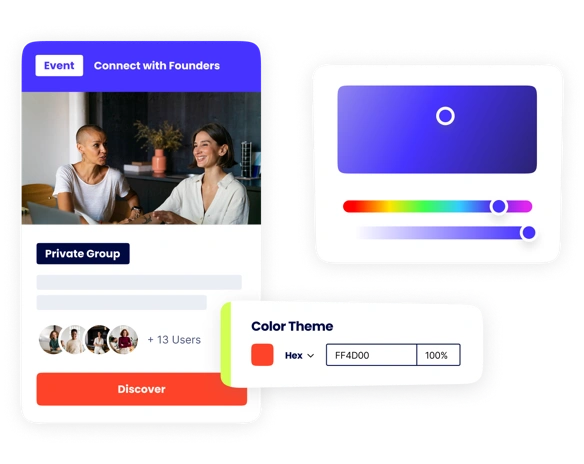
Create a consistent visual experience right across your platform, using Hivebrite’s advanced branding tools and visual customization.
Embed your organization’s imagery, color palette & typography allowing your audience to instantly associate with your brand.
Go further with your branding choices with gradients, dynamic assets and more creative visual customization.
Your mobile app is fully branded, personalized and visually distinct, downloaded as your own app.
Content management
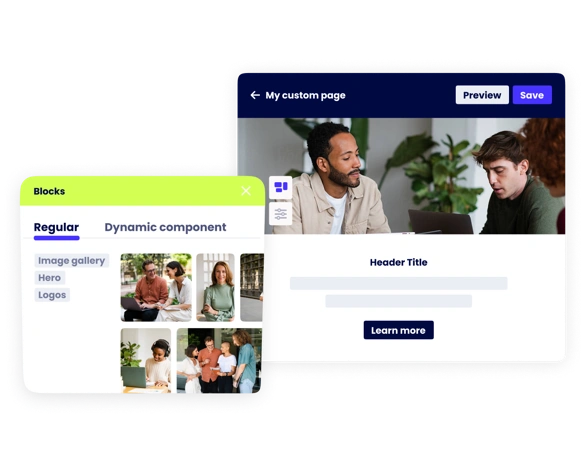
Build consistent digital media through Hivebrite’s intuitive content creation tools, maintaining visual identity across different media.
Our advanced design interface enables creative design choices to maximize impact in campaigns and custom content.
An easy-to-use HTML designer lets you create rich and visually appealing content posting across your platform.
Setup standard and custom templates that help you maintain consistency and curate content from within your community.
Promotion, sharing & SEO
Extend the visibility, reach and recall of your platform, and enable users to act as content and community advocates.
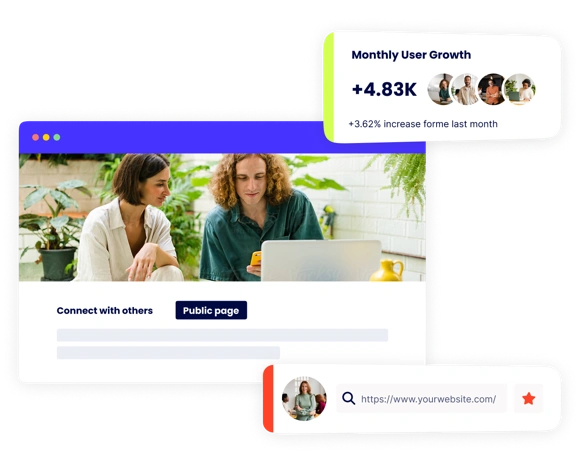
Your platform’s URL can be set to whatever domain name you own, fully leveraging searches and dovetailing with your website.
As well as the private community, you have a public facing front end to share selected content, raise awareness and drive sign-up.
Built-in social sharing buttons are augmented by SEO that is optimized at both a sitewide and individual level.
Cultural alignment
Match your community’s structure and tone to embody your identity and ensure your members feel a sense of belonging.
Both back and front office are available with a variety of language options, and postings can be live translated with built in integration.
Enforce end user terms to ensure that member behavior adheres to guidelines, norms, and expectations that reflect your community mission and values.
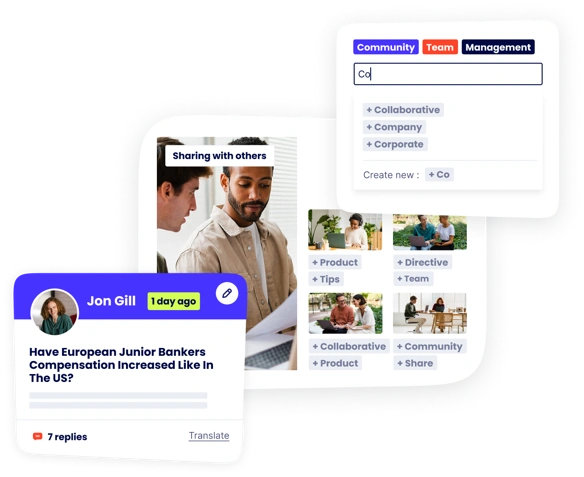
Ensure your brand voice is reflected across the system dialogue with extensively customizable naming and tagging.
Your all-in-one community platform.
Who we work with
Real communities.
Real results.
Over 2,000 organizations have chosen Hivebrite to power their communities across the globe.
“For any community to be successful in the long run it needs to innovate and continually add value, Hivebrite enables us to do this. We knew we were getting a premium, ever-improving platform.”
"We reduced time spent on administrative tasks relating to membership management by 60%."
"Hivebrite was going to be able to grow with us. We weren't going to run into the roadblocks or slowdowns we experienced with our last platform."
“Hivebrite has been instrumental in building and nurturing our CERN Alumni Community. Its flexibility and robust features allow us to connect our alumni globally, ensuring they remain engaged and connected to CERN’s mission.”
“Hivebrite enables us to sustain and scale our community and virtual engagement strategies to continue supporting our members as best as possible.”
“Hivebrite’s Mentoring Module was one of the key reasons we selected Hivebrite as our community engagement platform.”
“The platform and its features offer everything we need and more to engage our members and keep them coming back.”
“Centralizing our community and mentoring program on one intuitive platform improves our members’ experience. The UX and UI of the platform are great!”
Frequently asked questions.
Hivebrite is a comprehensive community management platform that can be customized entirely to mirror each organization’s visual identity.
Organizations including Roche, the Obama Foundation, the National Academy of Sciences, the Aspen Institute, the University of Notre Dame, the U.S. Naval Academy, and U.C. Davis trust Hivebrite to power their fully branded private communities.
Read more about Hivebrite customers and their community successes.
Having an online brand community can significantly impact member engagement. Online brand communities foster a sense of belonging, facilitate interactions among members, and enhance member loyalty and advocacy. Online brand communities influence member engagement in the following ways:
- Enhanced interaction and communication:
- Online communities provide a platform for members to interact with each other and with the brand. This interaction can increase engagement as members feel heard and valued.
- Members can share experiences, ask questions, and offer advice, creating a vibrant and active community.
- Sense of belonging:
- Being part of a community can create a strong sense of belonging among members. This emotional connection can lead to increased participation and loyalty.
- Members who feel part of a community are more likely to engage regularly and contribute content.
- Access to exclusive content and perks:
- Brands can offer community members exclusive content, early access to new products, special discounts, and other perks, which can incentivize participation and sustained engagement.
- Members who perceive added value from the community are more likely to stay active and involved.
- Feedback and co-creation:
- Online brand communities provide a valuable channel for collecting feedback and insights from members. This can enhance member engagement as they see their input being valued and acted upon.
- Involving members in co-creating products or services can increase their emotional investment and participation.
- Social identity and recognition:
- Members often seek recognition and status within the community. Features like badges, leaderboards, and member spotlights can drive engagement by rewarding active participation.
- Social identity theory suggests that individuals derive part of their identity from their groups, motivating them to stay active and engaged to maintain their status within the community.
- Emotional support and connection:
- Online communities often provide emotional support and a sense of camaraderie, especially if they are centered around shared interests or challenges.
- This emotional connection can lead to higher levels of engagement as members return to the community for support and interaction.
- Influence on purchase behavior:
- Active community members are more likely to be influenced by peer recommendations and brand advocacy within the community. This can lead to increased engagement through discussions about brand experiences and products.
- Engaged members are also more likely to advocate for the brand outside the community, which can attract new members and further enhance community engagement.
Empirical studies have shown that online brand communities can lead to increased customer satisfaction, loyalty, and advocacy, which drive higher engagement levels. For example, a study by Muniz and O’Guinn (2001) found that brand communities create shared consciousness, rituals, and a sense of moral responsibility among members, which enhances engagement. Another study by Algesheimer, Dholakia, and Herrmann (2005) found that identification with a brand community positively influences community engagement behaviors and brand loyalty.
In summary, online brand communities significantly impact member engagement through various mechanisms, including enhanced interaction, a sense of belonging, exclusive benefits, feedback opportunities, recognition, emotional support, and influence on purchase behavior.

The top characteristics of an online brand community that contribute to its success and member engagement include:
- Shared purpose and values:
- Common interests: Members share a common interest or passion related to the brand, creating a sense of unity.

- Aligned values: The community’s values align with those of the brand and its members, fostering a cohesive and supportive environment.

- Active participation and engagement:
- User-generated content: Members actively contribute content, such as posts, reviews, and discussions.
- Interaction: High levels of interaction between members and between members and the brand, including likes, comments, and sharing.
- Strong sense of community:
- Belonging: Members feel a strong sense of belonging and identity within the community.
- Support: The community provides emotional and practical support to its members, enhancing their connection to the brand.
- Effective communication channels:
- Multiple platforms: The community is accessible through various platforms (e.g., forums, social media, brand websites).
- Responsive: The brand actively participates in discussions, responds to queries, and communicates updates regularly.
- Valuable content and resources:
- Exclusive content: Access to exclusive content, such as behind-the-scenes information, early product releases, and special offers.
- Educational resources: Tutorials, webinars, articles, and other resources that add value to members’ experiences.
- Recognition and rewards:
- Incentives: Rewards for active participation, such as badges, points, and exclusive perks.
- Acknowledgement: Public recognition of members’ contributions and achievements within the community.
- Governance and moderation:
- Clear guidelines: Established rules and guidelines to ensure respectful and constructive interactions.
- Active moderation: Proactive moderation to manage conflicts, remove inappropriate content, and maintain a positive environment.
- Inclusivity and diversity:
- Welcoming atmosphere: An inclusive community that welcomes members from diverse backgrounds.
- Representation: Diverse representation in community leadership and content to reflect members’ varied interests.
- Continuous improvement:
- Feedback Loop: regularly seek and incorporate member feedback to improve the community.
- Adaptability: The ability to evolve based on changing member needs and industry trends.
- Brand Integration:
- Brand presence: A clear and consistent brand presence within the community, reinforcing brand identity and values.
- Alignment with brand goals: The activities and content within the community align with the brand’s overall goals and strategy.
By focusing on these characteristics, brands can build strong, engaged, and loyal online communities that drive sustained member engagement and support business objectives.
- Define your community purpose and goals
- Identify purpose:
- Clearly outline why you are creating this community. Is it to support customers, gather feedback, or build brand loyalty?
- Example: A tech company might create a community for user support and feature requests.
- Set goals:
- Establish specific, measurable, achievable, relevant, and time-bound (SMART) goals.
- Example: Increase community engagement by 30% within six months.
- Identify purpose:
- Understand your audience
- Research your audience:
- Conduct surveys, interviews, and analyze existing customer data to understand their needs, preferences, and pain points.
- Example: Use existing channels to identify common topics of interest and challenges faced by your audience.
- Create user personas:
- Develop detailed personas representing different segments of your audience.
- Example: A persona could be a tech-savvy millennial interested in sustainability.
- Research your audience:
- Choose the right platform
- Evaluate platforms:
- Consider the nature of your community and the platforms your audience frequents.
- Assess platform features:
- Look for features like discussion forums, event capabilities, and integrations with other tools.
- Example: A B2B company might prefer LinkedIn for its professional network capabilities.
- Evaluate platforms:
- Develop a content and engagement strategy
- Create a content plan:
- Plan a mix of content that educates, entertains, and engages your community.
- Example: Weekly blog posts, monthly webinars, and daily discussion prompts.
- Encourage participation:
- Foster engagement through polls, challenges, and user-generated content.
- Example: Host a photo contest where users share images of their experiences with your product.
- Create a content plan:
- Launch and grow your community
- Carefully prepare your launch:
- Promote the launch through email campaigns, social media, and influencers.
- Example: Offer exclusive perks for the first 100 members who join.
- Measure and iterate:
- Regularly track key metrics such as member growth, engagement rates, and content interaction.
- Example: Use analytics tools to measure the effectiveness of your content and adjust your strategy accordingly.
- Carefully prepare your launch:
When selecting a brand community platform, prioritize features that strengthen your brand identity while fostering meaningful customer connections. Your platform should serve as an extension of your brand experience, not just another digital touchpoint.
Essential Branding Features:
- Custom domain integration
- Brand color and typography controls
- Logo and visual asset management
- Customizable email templates
- Mobile app branding options
- White-label capabilities
Engagement Tools:
- Interactive member directories
- Discussion forums and groups
- Content publishing tools
- Event management features
- Direct messaging systems
- Recognition and rewards programs
Community Management Features:
- Member segmentation tools
- Automated workflows
- Content moderation controls
- Permission management
- Analytics dashboards
- Integration capabilities
Focus on platforms offering flexibility in design while maintaining consistent brand standards. The ability to create custom pages, modify layouts, and adjust user interfaces helps deliver an authentic brand experience across all community touchpoints.
Selecting the right community platform requires careful alignment between your brand strategy and technology capabilities. Start by defining clear objectives for your community and identifying which features directly support those goals.
Consider your brand’s unique needs:
- Target audience preferences
- Content delivery requirements
- Integration with existing tools
- Security and privacy needs
- Growth projections
- Resource availability
Evaluate potential platforms based on:
- Customization capabilities
- User experience design
- Mobile accessibility
- Support services
- Pricing structure
- Implementation timeline
For detailed platform comparisons and selection guidance, explore our comprehensive guide to best online community platforms.
Brand communities deliver measurable returns across multiple business dimensions. Understanding these benefits helps justify investment and guide strategic decisions.
Financial Benefits:
- Reduced customer support costs
- Increased customer retention
- Higher purchase frequency
- Enhanced customer lifetime value
- Lower marketing expenses
- Improved product feedback efficiency
Brand Impact:
- Stronger customer relationships
- Increased brand advocacy
- Enhanced brand loyalty
- Better market insights
- Authentic user-generated content
- Improved brand perception
Operational Advantages:
- Streamlined customer feedback
- Faster product innovation
- More efficient customer support
- Better customer insights
- Enhanced crisis management
- Improved market responsiveness
Measure ROI through metrics like:
- Active member growth
- Engagement rates
- Support ticket reduction
- Customer retention improvements
- Conversion rate increases
- Customer satisfaction scores
Growing a successful brand community requires strategic planning and consistent management. Focus on creating value for members while maintaining brand standards and community guidelines.
Growth Strategies:
- Clear onboarding processes
- Regular content programming
- Engaging discussion topics
- Member recognition programs
- Expert contributions
- Special interest groups
Moderation Best Practices:
- Establish clear guidelines
- Train moderator teams
- Use automated tools
- Monitor consistently
- Address issues promptly
- Document decisions
Community Health Measures:
- Track engagement metrics
- Monitor sentiment
- Gather member feedback
- Assess content quality
- Measure response times
- Review moderation efficiency
Engagement Tactics:
- Welcome new members
- Feature active contributors
- Share success stories
- Host regular events
- Create exclusive content
- Recognize achievements
Remember that community growth takes time and attention. Focus on quality interactions over rapid member acquisition. Build a foundation of engaged members who understand and support your brand values.
Consider implementing:
- Ambassador programs
- Expert networks
- Mentoring initiatives
- User-generated content campaigns
- Virtual events
- Recognition systems
Regular evaluation helps refine your approach. Track key metrics, gather member feedback, and adjust strategies based on what works best for your specific community. This data-driven approach helps optimize both growth and moderation efforts.