Something shifted in 2025. Across more than 1,000 live communities, participation climbed 40%. Members organised into smaller, more purposeful groups. Mobile became the default. And community platforms quietly became the connective tissue of organisations, linked in to the tools and systems members already use.
These trends come from behavioural data published in the Community Growth & Benchmark Report 2026, alongside survey data from 186 community professionals — and they all point to growth. That’s worth celebrating. But growth has a cost, and right now, it’s being carried by a small number of people managing more members, more activity, and more complexity than ever before.
These are the five trends shaping where community is heading, and what they mean for the people running it.
1. Participation is climbing
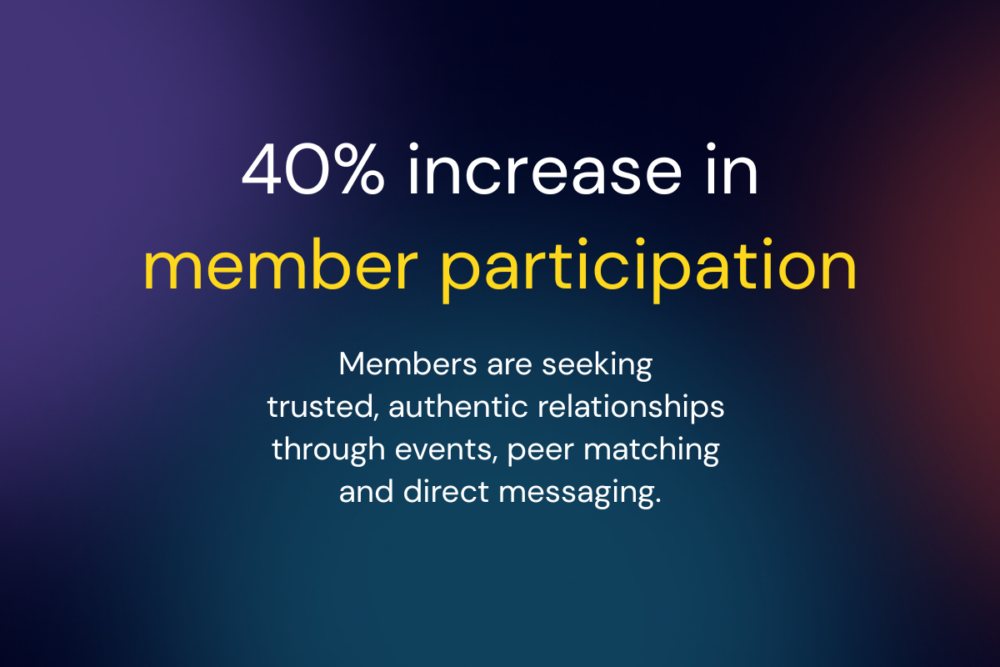
Member participation climbed 40% across communities in 2025. But the more telling number isn’t the volume. It’s the behaviour behind it. The channels driving that growth are events, peer matching, and direct messaging. Members aren’t looking for content to consume. They’re looking for people to connect with.
The survey data confirms it. When community professionals were asked what drives the most meaningful participation, 76.9% pointed to events. Peer-to-peer support came second at 40.8%, and discussion forums third at 37.4%. The pattern is consistent: the highest-performing engagement formats are all two-way.
2. Members are gravitating toward smaller, purpose-driven groups
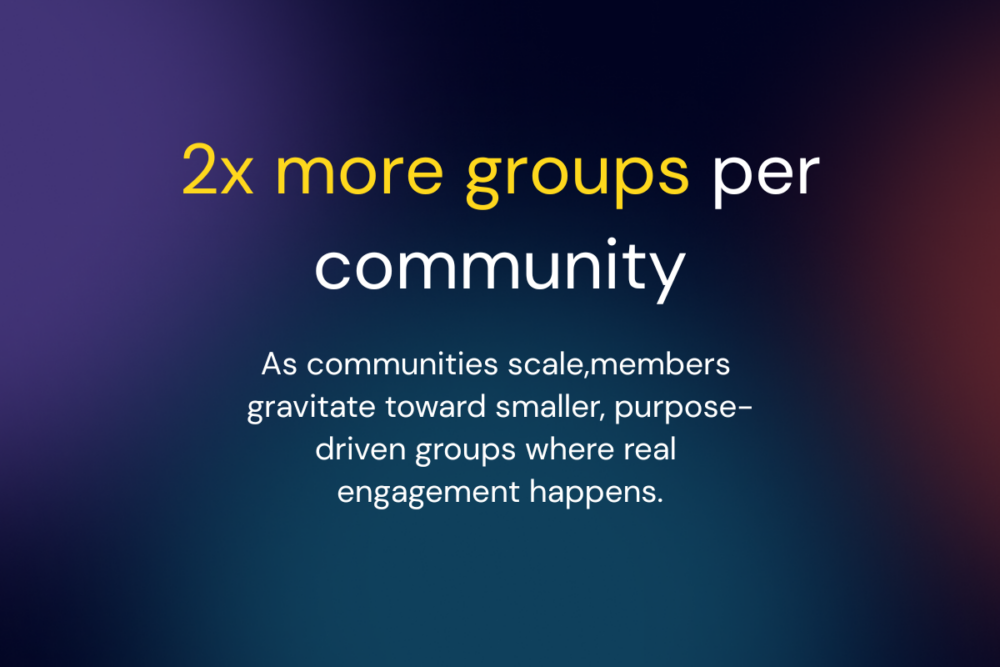
As communities grow, members don’t gravitate toward the big room, they look for a smaller one. Platform data shows communities now have twice as many groups as in previous years. The instinct to scale by adding members runs into a basic social truth: trust and connection form in spaces where people share context, not just a membership.
The survey data puts numbers to it. 74.8% say networking and connection is a primary purpose too. Members aren’t coming for content. They’re coming for each other. As the community grows, the smaller spaces are what keep it feeling worth showing up to.
3. Mobile is now the baseline, not the extra
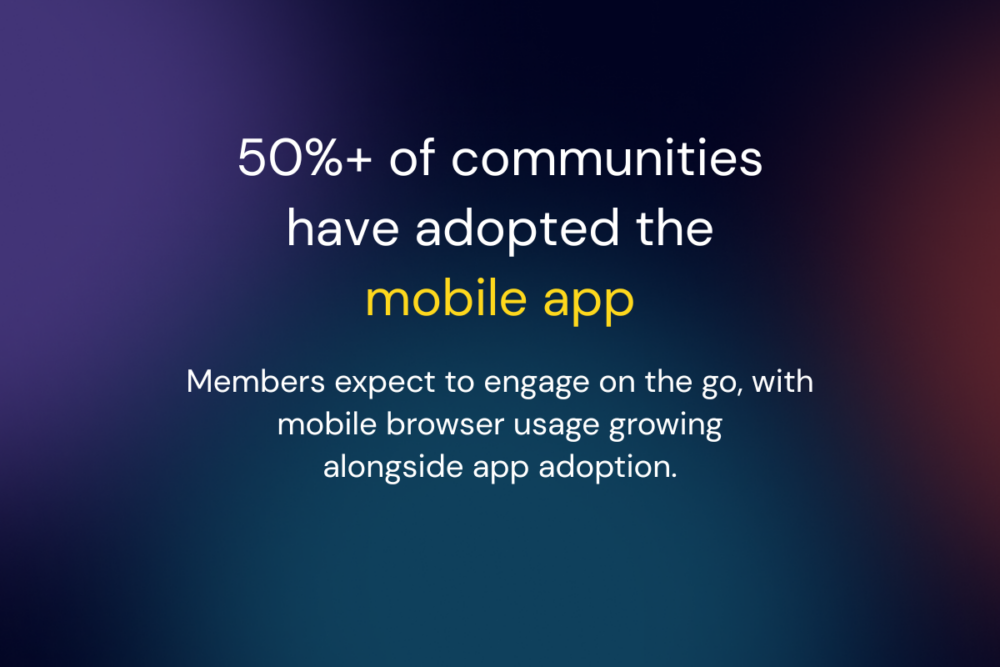
More than 50% of communities on the platform have now adopted the mobile app, and mobile browser usage is growing alongside it, not instead of it.
Members aren’t switching to mobile. They were already there.
This matters because mobile isn’t just a format preference, it’s a signal about when and how people want to engage. Commutes, breaks, evenings. The communities that treat mobile as an optional upgrade are adding friction to the moments members are most likely to show up.
4. Communities are moving from the edges of organisations to the centre
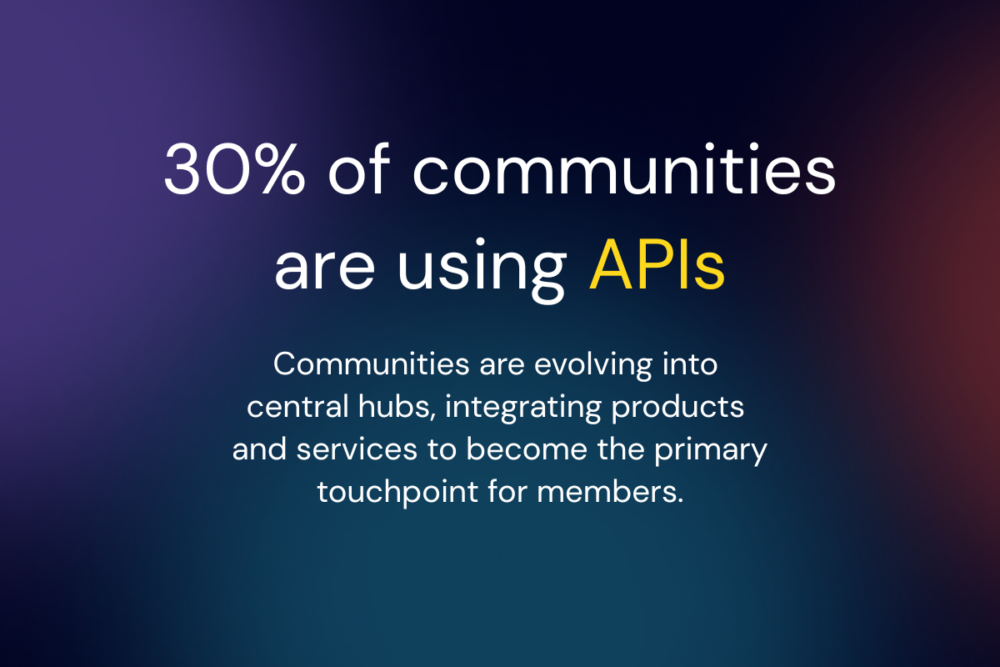
Thirty percent of communities are now using APIs to connect their community platform with other tools and services, their CRM, their learning platform, their product. That number tells a story about how the role of community is changing.
It’s no longer a standalone channel or a marketing add-on. It’s becoming the place that holds everything together: where the member relationship lives, deepens, and connects back to everything else the organisation does. When nearly a third of communities are actively building those connections, community isn’t an add-on. It’s a permanent part of how the organization operates.
The survey data points in the same direction. 89.1% of community professionals expect community to become more important in the next 12 to 24 months. That’s not optimism. That’s a signal about where investment and expectation are heading.
5. Growth is outpacing the teams behind it
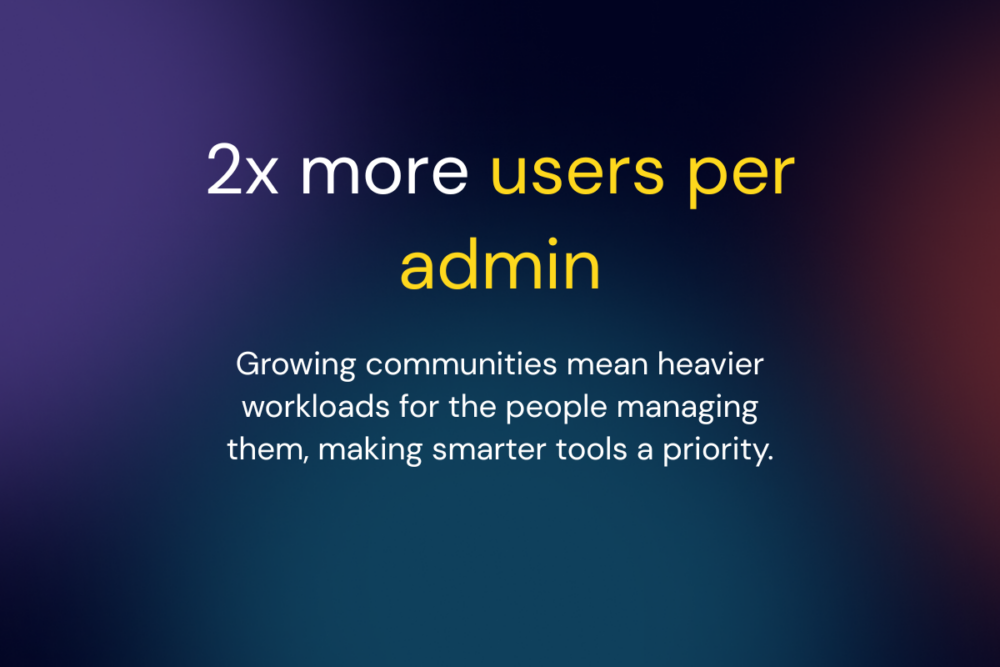
Every trend above represents growth. More participation, more groups, more mobile, more integrations. But growth doesn’t distribute itself evenly, and right now, the operational weight of it is landing on a relatively small number of people. Platform data shows communities now have twice as many users per admin as before. More members, more activity, more to manage, often with exactly the same team.
The survey puts a number to the human side of that. When community professionals were asked about their biggest challenge, 63.3% cited sustaining participation. Scaling the community was the second most cited concern at 45.6%, followed by resourcing and capacity at 34.7%. That’s not a strategy problem. That’s a resourcing problem wearing a strategy problem’s clothes. When the community grows but the team doesn’t, every engagement initiative costs more to run, and the gap between what’s expected and what’s possible quietly widens.
And the resourcing picture makes that gap concrete: 38.1% of community professionals say community is a part-time or shared responsibility. When the function is growing this fast, that’s a structural mismatch.
Built for where community is going. Or where it’s been?
For years, the hardest thing about community management was proving it mattered. That argument is over. The data shows communities growing, deepening, and becoming genuinely central to how organisations operate.
The harder question now isn’t whether community works. It’s whether the people building it have what they need to keep up with what it’s becoming. More members, more expectation, more complexity, and in most cases, the same number of people holding it together.
The communities that thrive won’t just be the ones that grew the fastest. They’ll be the ones that invested in the people growing them.
Download the Community Growth & Benchmark Report 2026 →